


How the Indian Arts Research Center Improved Collections Management Efficiency with TMS

Who They Are
-
Collection Scope: “[X] objects, across [formats]”
-
Sector Focus: “[e.g., Decorative Arts | Academic Museum | Photography Archive]”
-
Team Structure: “[#] person collections team using [Product]
-
Connected Ecosystem – From storage to exhibitions, all in sync
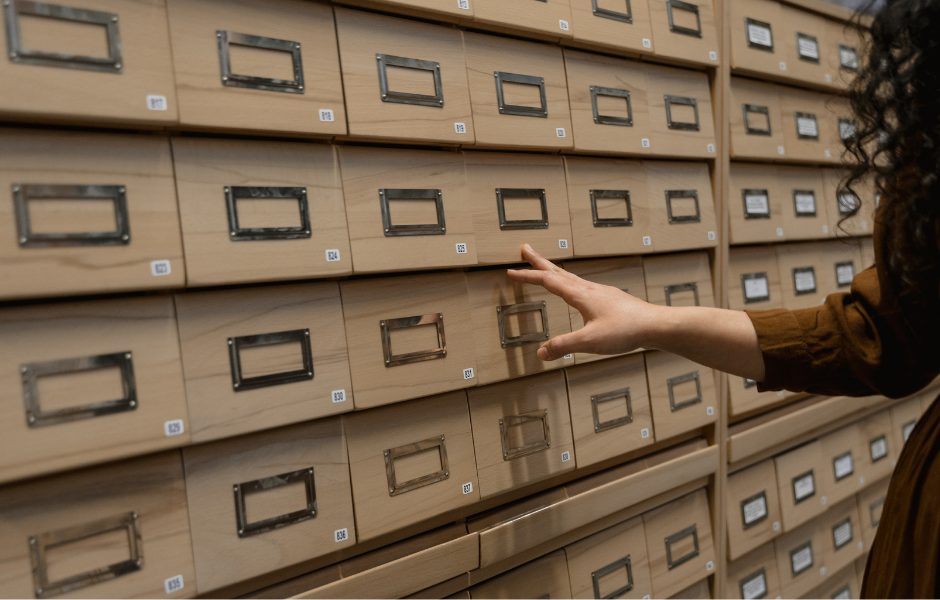
Large-Scale Collection, Small-Scale Team: Effectively Maintaining Community-based Cultural Collections
The Indian Arts Research Center (IARC), a division of the School for Advanced Research (SAR) located in Santa Fe, New Mexico, implemented TMS from Gallery Systems to efficiently manage their extensive collection of Southwestern Native Art. Although not a traditional exhibiting museum, the IARC houses a combined collection of approximately 12,000 Southwest Native American ceramics, textiles, works on paper, and other cultural items, and also over 345,000 archaeological items native to the region, including thousands of objects from the Arroyo Hondo excavations. Just as importantly, IARC serves as a cultural hub for artists, scholars, and the local community.
Challenges
The IARC has only six primary staff members, in addition to temporary staff that include interns, volunteers and visiting researchers. With such a small and transient team the IARC faced the problem of finding a Collection Management System (CMS) that offered the sophistication to properly document and maintain their diverse collection objects along with supporting documents and images, while being easy to use and accessible. The IARC wanted a CMS that would encourage transparency to support their mission of connecting artists, scholars, and researchers with the collection.
Solution
The IARC selected TMS because of its comprehensive feature set and intuitive interface. “We chose TMS because it was the most robust, intuitive and responsive of the collections management systems we researched,” stated IARC registrar Jennifer Day.
“We chose TMS because it was the most robust, intuitive and responsive of the collections management systems we researched,” stated IARC registrar Jennifer Day.
Results
Upon implementation, the IARC team was immediately impressed by the TMS Media module. “The Media module’s flexibility is one of our favorite features,” said Jennifer. “It allows us to easily manage different types of media, including digital documents and photographs, as well as physical media like slides and transparencies.” Jennifer explained that this is essential to organizing before-and-after photos and other documentation related to conservation.
“As we become comfortable with various features [of TMS], we continually find ways of using others that allow us to improve both the quantity and quality of our data.”
The Events module has also proved useful in tracking tribal collection review sessions and arts-related seminars. The IARC is now able to record who attended an event, which objects were used, and provide summaries for all staff members. In addition, TMS has allowed the team to complete Loan and Exhibition records dating back to 1979, extending their ability to track where and when items have been exhibited.
The Bibliography module, Rights and Reproductions, and user-defined, customizable data entry fields, have all helped the IARC staff in managing special projects that were too challenging for their previous system to handle. “We’ve been able to track specific instructions to staff regarding culturally-appropriate access, handling and storage. We are also noting if the items are appropriate for use in publications since some items are culturally sensitive and require considerations unique to their situation.” Jennifer continued, “We use the Bibliography module to record which collection items have appeared in publications. It’s not just a list of citations, but a tool that allows us to navigate back and forth between a bibliographic entry and the corresponding object records. This is very helpful from a data entry standpoint and to those who utilize our collection for research.”
At the IARC, TMS has helped put collection management at the staff’s fingertips by making it easier, more customizable and more transparent. Achieving this high standard is essential for IARC’s small team who are now able to make the best use of their existing resources. Perhaps most importantly, the collection is now more accessible to the wider community. “TMS has benefited our institution by allowing us to add, track, and report on collection information in ways that were impossible with our previous database. As we become comfortable with various features, we continually find ways of using others that allow us to improve both the quantity and quality of our data,” summarized Jennifer.
The Challenge
-
Create a richly-illustrated research database for the public
-
Incorporate detailed maritime classification (i.e. class, type, distribution)
-
Provide search results with multiple viewing options
-
Allow the public to nominate vessels online
-
Increase the collection of data via public participation

The Solution
-
A centralized TMS database for collection and media records
-
Role-based user access for registrar, curators, and IT
-
Reporting tools for audit and compliance workflows


-
114
Vessels of Significance listed
-
30
new vessel entries submitted by private owners and regional institutions in the first month
-
1,000
Vessels within 5 years projected
Preserving Maritime History at Scale
Powered by eMuseum and TMS, ARHV has become a central destination for documenting historic vessels, combining museum expertise with public contributions to build a comprehensive national record.

One Platform for Collections Management,
Conservation, Media, and Publishing
eMuseum

TMS Suite
More Success Stories

What Responsible AI Looks Like in Collections Management
Artificial intelligence has quickly become part of everyday work. From drafting emails and summarizing meetings to organizing research and translating content, AI-powered tools are helping…

Standardizing Collections Data: From Tactical Cleanup to Data Governance
Museum professionals are well acquainted with the discipline required to produce high-quality administrative content. Grant proposals, exhibition labels, and marketing materials are typically…

What Responsible AI Looks Like in Collections Management
Artificial intelligence has quickly become part of everyday work. From drafting emails and summarizing meetings to organizing research and translating content, AI-powered tools are helping…
Standardizing Collections Data: From Tactical Cleanup to Data Governance
Museum professionals are well acquainted with the discipline required to produce high-quality administrative content. Grant proposals, exhibition labels, and marketing materials are typically…
What Responsible AI Looks Like in Collections Management
Artificial intelligence has quickly become part of everyday work. From drafting emails and summarizing meetings to organizing research and translating content, AI-powered tools are helping…
Standardizing Collections Data: From Tactical Cleanup to Data Governance
Museum professionals are well acquainted with the discipline required to produce high-quality administrative content. Grant proposals, exhibition labels, and marketing materials are typically…
What Responsible AI Looks Like in Collections Management
Artificial intelligence has quickly become part of everyday work. From drafting emails and summarizing meetings to organizing research and translating content, AI-powered tools are helping…
Standardizing Collections Data: From Tactical Cleanup to Data Governance
Museum professionals are well acquainted with the discipline required to produce high-quality administrative content. Grant proposals, exhibition labels, and marketing materials are typically…
What Responsible AI Looks Like in Collections Management
Artificial intelligence has quickly become part of everyday work. From drafting emails and summarizing meetings to organizing research and translating content, AI-powered tools are helping…
Standardizing Collections Data: From Tactical Cleanup to Data Governance
Museum professionals are well acquainted with the discipline required to produce high-quality administrative content. Grant proposals, exhibition labels, and marketing materials are typically…