The Hidden Operational Costs of Poor Data in Museums
Museums have long understood the cultural value of their collections. Increasingly, however, they must also confront the operational value and cost of the data that describes those collections.
Collection records are not static documentation. They are active infrastructure. They power exhibitions, loans, conservation planning, digital engagement, fundraising initiatives, reporting, and research access. When that data is inconsistent, incomplete, or siloed, the operational consequences are tangible. Inefficient data is not merely an administrative inconvenience; it is a measurable institutional cost.
The scale of that cost becomes clearer when viewed beyond the museum sector. Gartner estimates that poor data quality costs organisations an average of $12.9 million annually. Harvard Business Review has reported that bad data costs the U.S. economy an estimated $3 trillion per year. Museums operate at a different financial scale, but they face the same underlying dynamic: when data cannot be trusted, institutions substitute labour, time, and risk mitigation for reliability.
This is where museum data governance becomes operationally decisive.
1. Staff Time: The Hidden Multiplier
Staff time is often the most immediate and underestimated cost of inefficient data. When object records are inconsistent, whether due to variations in artist names, geographic terms, object types, or credit lines, staff must spend significant time reconciling discrepancies before they can complete routine tasks such as generating wall labels, producing loan agreements, compiling insurance valuations, preparing board reports, or responding to research inquiries.
Consider a common scenario: a single geographic location recorded in multiple ways, such as “Philadelphia,” “Phila.,” and “Philly,” across thousands of records. Even a simple query becomes unreliable, requiring staff to manually filter, export, reconcile, and verify results. When this type of inefficiency is repeated across departments, including registrars, curators, collections managers, and development teams, the cumulative impact on productivity becomes substantial.
The operational cost is not just the initial correction. It includes:
- Repeated verification cycles
- Increased risk of human error
- Delays in exhibition timelines
- Slower response to external stakeholders
Outside the museum sector, IBM reports that more than a quarter of organisations estimate losing over $5 million USD per year due to poor data quality, with some reporting losses exceeding $25 million USD. Museums may not quantify losses in revenue terms, but the equivalent cost appears in labour hours, duplicated workflows, and project delays.
A robust collections management system that supports controlled vocabularies, validation rules, and standardized data entry significantly reduces this recurring friction. Tools within systems like TMS Collections are designed to promote consistency at the point of entry, where standards can be enforced before inconsistencies spread. Preventing errors upstream is significantly less costly than correcting them across thousands of records later.

2. Exhibition and Loan Risk
Exhibitions rely on precise, trustworthy data. Errors in object dimensions, credit lines, provenance, or insurance values can have financial and reputational consequences.
Inefficient data increases risk in several ways:
- Outdated or inconsistent insurance values complicate loan negotiations.
- Incomplete provenance records create compliance challenges.
- Missing conservation notes can lead to inappropriate display conditions.
- Inaccurate dimensions affect mount fabrication and transport planning.
When data cannot be trusted, staff build parallel verification processes—spreadsheets, email threads, manual cross-checks. These shadow systems are costly, fragile, and unsustainable.
At sector scale, the magnitude of collections data makes this issue even more pressing. The UK’s Museum Data Service, for example, aims to aggregate and standardise over 100 million museum object records. Initiatives of this scale illustrate how quickly inconsistencies multiply when records must travel beyond a single department or institution.
A unified collections management platform reduces reliance on disconnected tools by centralizing authoritative data. Within the broader TMS Suite, integrated workflows ensure that exhibition, loan, and conservation modules operate from the same core dataset (minimizing duplication and reducing institutional risk).

3. Reporting and Strategic Decision-Making
Museum leadership depends on accurate, well-structured data to inform strategic decision-making. Questions such as what percentage of the collection is on view, how many objects require conservation assessment, which areas of the collection are underrepresented, or the total insured value of objects currently on loan all rely on consistent and reliable data. When collection data lack’s structure or standardization, reporting shifts from precise analysis to rough approximation, limiting confidence in the insights used to guide institutional priorities.
Industry expectations reinforce this pressure. In England alone, 622 museums contributed structured data to the most recent Annual Museum Survey conducted by Arts Council England. Globally, museums are increasingly expected to provide defensible metrics to boards, funders, and stakeholders.
Inefficient data impairs strategic planning in three key ways:
- Delayed reporting cycles – Staff must manually compile information.
- Reduced confidence in outputs – Leadership questions the reliability of reports.
- Missed funding opportunities – Grant proposals require accurate, defensible statistics.
Systems designed with relational architecture and structured reporting tools allow museums to generate reliable insights directly from their collections database. When data is standardized and centralized, as in a purpose-built solution like TMS Collections, institutions can shift from reactive data cleaning to proactive planning.
4. Digital Engagement and Public Trust
Today’s audiences expect seamless digital access to museum collections. Online collections portals, APIs, and digital asset platforms depend on clean, structured metadata.
The scale of digital engagement underscores the stakes. According to the UK Department for Culture, Media and Sport, DCMS-sponsored museums recorded 165.1 million unique website visits in 2023/24, the highest since records began. While this reflects UK national institutions, it signals a global trend: digital access is central to museum relevance.
Inefficient data also undermines the success of digital initiatives. When data is inconsistent or poorly structured, it can result in broken or unreliable search results, reduced discoverability, misalignment between object images and their associated metadata, and the presence of redundant or conflicting records. These issues not only diminish the user experience but also limit the effectiveness of digital platforms intended to increase access and engagement.
Public-facing errors erode credibility. Internally, digital teams must compensate with manual corrections, exports, and reformatting—further increasing operational overhead.
When collections management systems integrate with digital asset management and web publishing tools, as such as eMuseum and the broader TMS Suite, metadata flows more reliably across platforms. The result is improved discoverability, stronger audience engagement, and reduced duplication of effort.

5. Conservation and Risk Management
Data inefficiency also affects collections care. If conservation records are stored separately from object records, or inconsistently linked, institutions face:
- Delays in identifying treatment history
- Difficulty tracking hazardous materials
- Gaps in environmental monitoring documentation
- Reduced visibility into long-term preservation needs
Research on museum digitisation underscores that one of the most significant costs in collections modernisation is not imaging, but migrating and structuring legacy information into updated systems. When data is fragmented or inconsistently structured, conservation and preservation initiatives become more complex and expensive.
Integrated collections management systems ensure conservation histories, condition reports, and risk assessments remain directly associated with the relevant object records. By consolidating this information within a unified environment, museums reduce both operational and preservation risk.

6. The Compounding Cost of “We’ll Fix It Later”
Perhaps the greatest operational cost is deferral. Many institutions inherit decades of legacy data such as imported spreadsheets, outdated terminology, and inconsistent formatting. As day-to-day operations take priority, data normalization is postponed.
However, the longer these inefficiencies persist, the more difficult and costly they become to address. As datasets continue to grow, workflows increasingly adapt to and depend on inconsistent structures, embedding inefficiencies into daily operations. Over time, this compounds the complexity of remediation, making future data standardisation efforts significantly more resource-intensive and expensive.
Data debt behaves like financial debt: it accrues interest in the form of increased labour and institutional risk.
Modern collections management systems offer tools for mass updates, batch editing, vocabulary control, and audit tracking that allow museums to address this debt strategically rather than reactively. Within TMS Collections, structured authority files and controlled term management support sustainable data governance to ensure improvements endure beyond a single cleanup initiative.
7. Data as Infrastructure, Not Documentation
Museums increasingly operate as complex enterprises. They manage traveling exhibitions, global loans, digital publications, donor reporting, compliance requirements, and conservation oversight. Data underpins all of it.
Cross-sector research reinforces this perspective. IBM reports that 43% of chief operations officers identify data quality as their most significant data priority. Data quality is not treated as a technical afterthought; it is an operational leadership issue.
When collection information is treated as static documentation, inefficiencies remain invisible. When it is recognized as institutional infrastructure, investment becomes imperative.
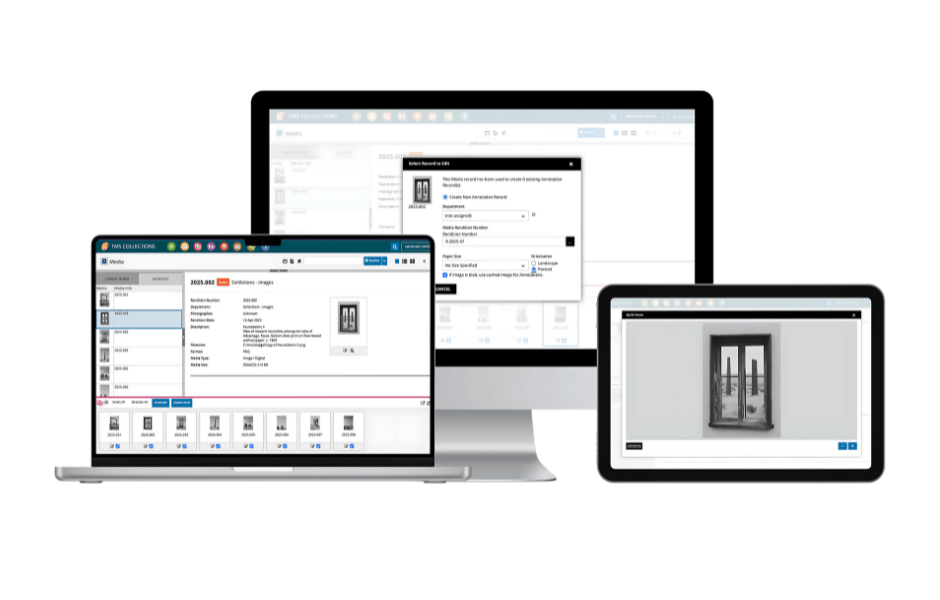
A purpose-built collections management platform is an operational backbone. Solutions like TMS Collections are designed specifically for the complexities of museum workflows. They align curatorial, registration, conservation, and digital teams around a shared, structured data environment.
The return on investment is measurable:
- Reduced staff time spent reconciling inconsistencies
- Lower risk in exhibition and loan processes
- Faster, more reliable reporting
- Improved digital engagement
- Stronger institutional confidence in decision-making
Moving from Cost Center to Strategic Asset
The operational cost of inefficient data is cumulative and often underestimated. It surfaces in small delays, repeated corrections, and parallel processes, but across departments and fiscal years, the impact is significant.
Museums that prioritize structured data governance, supported by systems purpose-built for collections management, move from reactive correction to proactive strategy. In doing so, they reposition collection data from an operational burden to a strategic asset that supports confident decision-making, reduced risk, and sustainable growth.
For institutions seeking to modernize workflows, strengthen data integrity, and lower long-term operational costs, investing in a comprehensive collections management environment is not simply a technology decision. It is an institutional one.
To explore how your organization can reduce data inefficiencies and build a stronger operational foundation, contact our experts to start the conversation.