


How M+ Improved Archive Management with TMS
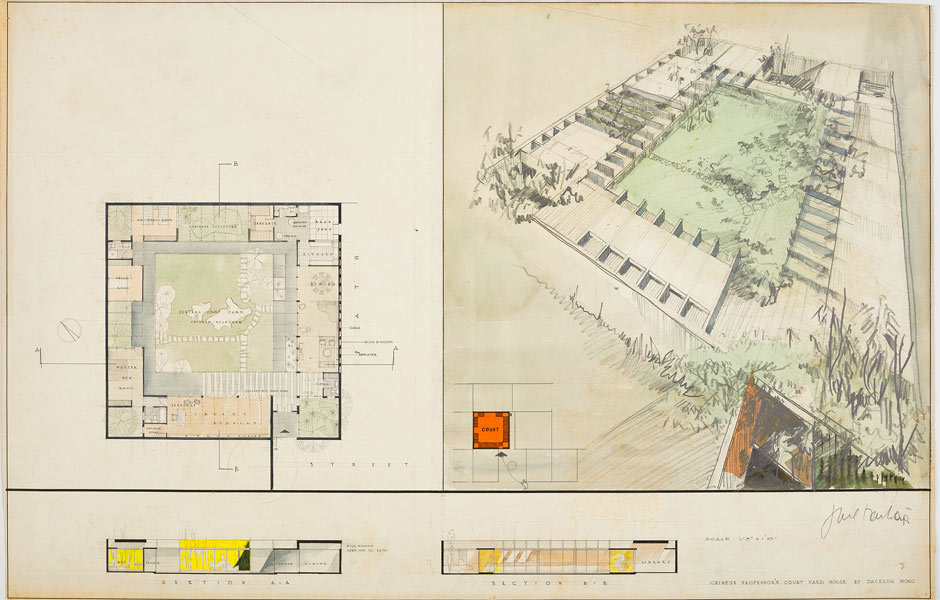
Who They Are

Illuminating the Archives
M+, a new museum in Hong Kong’s West Kowloon Cultural District, has set out to become one of the world’s largest museums of modern and contemporary visual culture and has spent the last several years collecting objects from around the globe.
In addition to artworks and objects, M+ also acquires archives. Kevin Forkan, Head, Archives and Library, explains the difference: “Archival objects are objects that can only be understood in the context of the rest of the items with which they belong; they need to be comprehended as part of a whole.” With a collection of both museum objects and archival material, the staff needed to find a way to catalogue and care for both objects and archives properly.
The Challenge
Previously, the archives collected at M+ had been treated as if they were standard museum objects, but this does not take account of the hierarchical nature of archive arrangement. “Archives are structured differently and managed differently,” explains Jim Whittome, Manager, Collections Database. Kevin agrees: “A single archive (fonds) contains many items. With art, you acquire one painting, one object. With archives, you acquire an entire archive, and there could be 100,000 things in it. You cannot catalogue these 100,000 things as if they were each an individual artwork.”
Jim and Kevin’s teams were charged with cleaning their legacy archive data and creating a sustainable system for the future.
The Plan
Kevin and his colleagues developed a plan with the Gallery Systems team to catalogue the M+ archives using their Collections Management System (CMS), TMS.
First, two new departments were created in TMS to manage security and access to archival records. An ‘Archive Accessions’ department was created to manage all archival material associated with one acquisition, and an ‘Archives’ department was created for cataloguing archival records.
M+ relies on the ISAD (G) descriptive standard to structure the cataloguing of their archival collections, although with some modifications to take account of museum cataloguing standards. Kevin’s team uses ISAD(G) to guide their description of archive material and help make the information searchable. The fonds is a collection of objects with the same provenance or origin. From there, the archives are organized by series, sub-series, file, and so forth.
Next, the team used a data map, exploring how they could match up the information from the ISAD(G) standard into TMS fields. As Kevin tells us, they started with the ISAD(G) data schema. “We created an Excel sheet with the correct ISAD(G) fields grouped, with an example of where each data unit came from. ISAD(G) is a relatively simple data schema and when we examined it, we found that we could map many fields to existing TMS fields. For others, particularly for the more extensive textual fields at the top level of a fonds description, custom text fields were needed, and these were then created by Jim and his team.” The team marked the data as mandatory or not mandatory, and at which archival level it belonged: at the fonds, series, sub-series, or another level. Kevin tells us, “That’s how we started. We changed some things as we went, such as using more of our own custom Text Entries.” Using TMS Text Entries allows the team to have data in both English and Chinese, a key requirement for M+.
The M+ team also created systems to save time and cut down on human error. Jim explains, “We used the TMS Importer for the initial data import. It’s straightforward and it’s nice to have that ‘copy to selection’ function. It allows us to do rapid data entry.”
When creating fonds level descriptions, Kevin and Jim were able to use the parent-child relationships in TMS to easily map their archival collections. “In terms of the cataloguing side, it’s pretty simple,” Kevin says. “With the parent-child relationships, we use ‘contains’, and ‘is a part of.” By defining the hierarchies of the fonds using these qualifiers, the team is able to express the different levels in the hierarchy without confusion.
Kevin gives an example. “We indicate: Record X contains record ABC. ABC is a part of record X.” Additionally, they use parent-child relationships to link one or more Archive Accessions to a catalogue. Kevin explains that “at M+, usually a single accession of archival material creates a fonds. However, in some cases there are multiple accessions that make up a fonds. In all of these cases, the fonds is the parent record and its accessions are children.”
Finally, the team uses the “See also” relationship to link works together. “Say we have an architectural drawing in the archives, and a model in the collection,” says Kevin. We use ‘See also’ to link those together on an equal basis.” The ability to link material in the archives to objects in the collection is an important advantage of using TMS for all collections at M+.
Creating this system for managing the acquisition and cataloguing of archives was only part of the project. A huge undertaking was putting right what had been entered in the three years before this configuration was put in place. “Cleaning the archives was a colossal task. It took over a year, maybe a year and a half,” says Kevin.
The Results
Thanks to this joint project by the Archives and Library and Collection Database teams, M+ built a robust system to manage the acquisition and cataloguing of archives. With their CMS in order, they were able to further develop processes and workflows to allow archives to be used in a museum context. Kevin gives the example of exhibitions. “Often, we catalogue archives at the file level and there may be multiple individual items in a file. If one of these items is chosen for exhibition, we create a special ‘piece’ record for that item so that it can be tracked through an exhibition and remain in the exhibition history, which in turn is managed by TMS.”
Additionally, Kevin and Jim have seen greater collaboration with other teams at M+, as many workflows require cross-departmental cooperation. “If we receive a donation or purchase of an archive,” Kevin explains, “Curatorial creates the initial Archive Accession record. Registration manages the record as it moves through the acquisition and shipping process, using the shipping module in TMS. When the physical material arrives at M+, Registration transfers it to Archives and Library, and we take responsibility for the material and give the record its final number.”
After this process, Kevin’s team gets to work on cataloguing the archive. Each catalogue, or finding aid, is created in a separate part of TMS, the Archive department. A finding aid could contain tens of thousands of TMS records, all linked hierarchically to the fonds-level record. The Archive Accession record is then linked to the fonds-level record, and if the same donor wants to add to the archive later, it’s easy to link the second accession to the same catalogue record. “It goes through the same acquisition process because it’s a separate acquisition, and then we add it to the catalogue, so the two acquisitions end up being linked,” explains Kevin. “This is a key reason why you need to have separate parts of the database for acquisitions and cataloguing when managing archives. It’s not like object cataloguing.”
The Future
As M+ gets closer to their public opening date in 2021, the Archives and Library team is continuing their cataloguing work thanks to the new processes they have put in place in TMS. “In addition to cataloguing, we have a number of projects underway to make our archival holdings available on the M+ Collections website,” says Kevin. “We work with our Rights and Reproductions team to continue to digitize the archives. We’re gathering data from Curatorial to write enriched fonds-level descriptions that provide a full picture of how each fonds came to M+ in its present form. We are working with the Editorial team to translate all of our public-facing fields into Traditional Chinese, and with our Digital team to design how archives are displayed on the Collections website.”
Using TMS to catalogue the archives has allowed Kevin and Jim to remain on the same page, and to work closely with the rest of the M+ team. “Everything runs from TMS,” notes Kevin. “The acquisition, cataloguing, conservation, exhibitions, photography, and rights management are all managed through it.” “TMS is the heart of everything,” adds Jim.
Keep an eye out for the opening of M+ in Hong Kong, coming in 2021.
The Outcome: Leaner Data, Smarter Workflows
The migration delivered tangible results. Over 25,000 obsolete records were purged, giving the team a cleaner foundation for future data-cleaning and documentation efforts. With TMS Collections in place, the need for complex IT support and virtual desktops vanished. New users could be onboarded more easily, and collection staff could focus more time on core activities.
The project met and exceeded expectations—not just in terms of performance, but also in cultural change. Users embraced the new platform enthusiastically, and the institution permanently shifted to more agile and efficient working methods.
Reflections and Advice
For Megaw, the greatest point of pride was how the institution met the moment. “In the end we were given quite a short timeframe by our IT team to complete the upgrade,” he reflected, “so I was most pleased that we managed to complete the preparations for upgrade, train all users, and successfully upgrade within a couple of months.”
A New Chapter in Collection Management
Aberdeen Archives, Gallery & Museums now operates with a collections management system that is faster, cleaner, and more accessible. By embracing change under pressure and committing to purposeful planning, AAGM not only improved internal efficiency but also strengthened its capacity to serve the public—amplifying Aberdeen’s cultural legacy for years to come.
“Permanently improved ways of working for all TMS users achieved in a short period of time.” — Thomas Megaw, Lead Curator (Collections Management)
If you’re considering transitioning from TMS for Windows to TMS Collections and would like to speak with a Gallery Systems expert about your options, we’re here to help. Please fill out our contact us form to start the conversation.
The Challenge: Modernizing Collections Systems for Greater Access
-
Existing systems prevented future growth
-
Barriers to collaboration
-
A cross-campus initiative required a unified access strategy

The Solution: Transitioning to TMS Collections and eMuseum
-
Migrated from EmbARK and Web Kiosk to TMS Collections and eMuseum
-
Implemented a web-based collections management system with remote access capabilities
-
Leveraged Gallery Systems Managed Hosting for ongoing maintenance, security, and updates
The Results
-
Created a scalable cataloguing system for more than 3,000 time-based media works
-
Improved preservation and documentation of migrated digital assets
-
Reduced storage complexity through structured management of multiple file versions
-
Improved access to collection information and online research resources

-
40%
Less time spent cataloguing new objects
-
100%
On-time internal audits
-
3x
Faster access to media across roles
-
19
Museum Studies, Art History, and Fine Art Degrees
Less Admin, More Accuracy, Better Access
After go-live, the team saw measurable improvements in how they worked across departments.

One Platform for Collections Management,
Conservation, Media, and Publishing
TMS Collections

TMS Media Studio
More Success Stories

Why Galleries Can No Longer Wait to Modernize Their Gallery Management Software
The Art World’s Technology Reckoning Only 19% of galleries call themselves technology leaders, yet 43% plan to invest more in online sales this year, according to Artsy’s Art Market…
Collective Conversations with Chad Petrovay
Professional Services Specialist, Gallery Systems With a museum career spanning multiple institutions and over a decade partnering with Gallery Systems clients, Chad brings a rare combination of…

Why Galleries Can No Longer Wait to Modernize Their Gallery Management Software
The Art World’s Technology Reckoning Only 19% of galleries call themselves technology leaders, yet 43% plan to invest more in online sales this year, according to Artsy’s Art Market…
Collective Conversations with Chad Petrovay
Professional Services Specialist, Gallery Systems With a museum career spanning multiple institutions and over a decade partnering with Gallery Systems clients, Chad brings a rare combination of…
Why Galleries Can No Longer Wait to Modernize Their Gallery Management Software
The Art World’s Technology Reckoning Only 19% of galleries call themselves technology leaders, yet 43% plan to invest more in online sales this year, according to Artsy’s Art Market…
Collective Conversations with Chad Petrovay
Professional Services Specialist, Gallery Systems With a museum career spanning multiple institutions and over a decade partnering with Gallery Systems clients, Chad brings a rare combination of…
Why Galleries Can No Longer Wait to Modernize Their Gallery Management Software
The Art World’s Technology Reckoning Only 19% of galleries call themselves technology leaders, yet 43% plan to invest more in online sales this year, according to Artsy’s Art Market…
Collective Conversations with Chad Petrovay
Professional Services Specialist, Gallery Systems With a museum career spanning multiple institutions and over a decade partnering with Gallery Systems clients, Chad brings a rare combination of…
Why Galleries Can No Longer Wait to Modernize Their Gallery Management Software
The Art World’s Technology Reckoning Only 19% of galleries call themselves technology leaders, yet 43% plan to invest more in online sales this year, according to Artsy’s Art Market…
Collective Conversations with Chad Petrovay
Professional Services Specialist, Gallery Systems With a museum career spanning multiple institutions and over a decade partnering with Gallery Systems clients, Chad brings a rare combination of…