
How purpose-built software transforms corporate collections into active business resources
Corporate collections play a critical role in preserving brand heritage, supporting product innovation, and enabling storytelling across marketing, design, and communications teams. Yet many organizations still rely on traditional archive systems to manage these assets. While archives are valuable for long-term record retention, they are not designed to support the active, multi-departmental use cases that define modern corporate collections.
Corporate heritage, however, takes different forms across organizations. Some companies manage corporate art collections, others maintain corporate archives focused on historical records, and many manage both— often with separate teams and systems that need to work together more effectively.
A collections management system (CMS) is purpose-built to manage objects, artworks, and historically significant items as living resources — not static records. For organizations looking to unlock the full value of their corporate collections, a CMS is not an upgrade from an archive system; it is a fundamentally different tool.
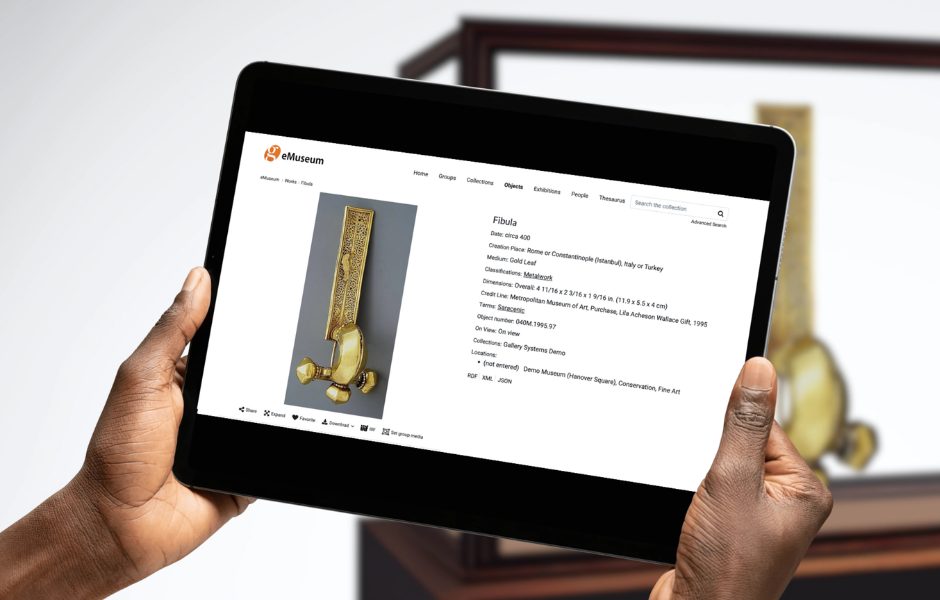
Archive Systems vs. Collections Management Systems
To understand why a collections management system is better suited for corporate collections, it is important to distinguish between the two system types.
Archive Systems
Archive systems are designed primarily for:
- Long-term preservation
- Records management and compliance
- Linear, hierarchical storage (fonds, series, files)
- Limited object-level context
- Restricted access for specialist users
Archive systems work well for documents, correspondence, and institutional records, and they remain essential for organizations whose primary goal is preserving and managing historical documentation. However, they are not optimized for physical or digital objects that require rich descriptive data, visual documentation, or frequent reuse.
Collections Management Systems
Collections management systems are designed to:
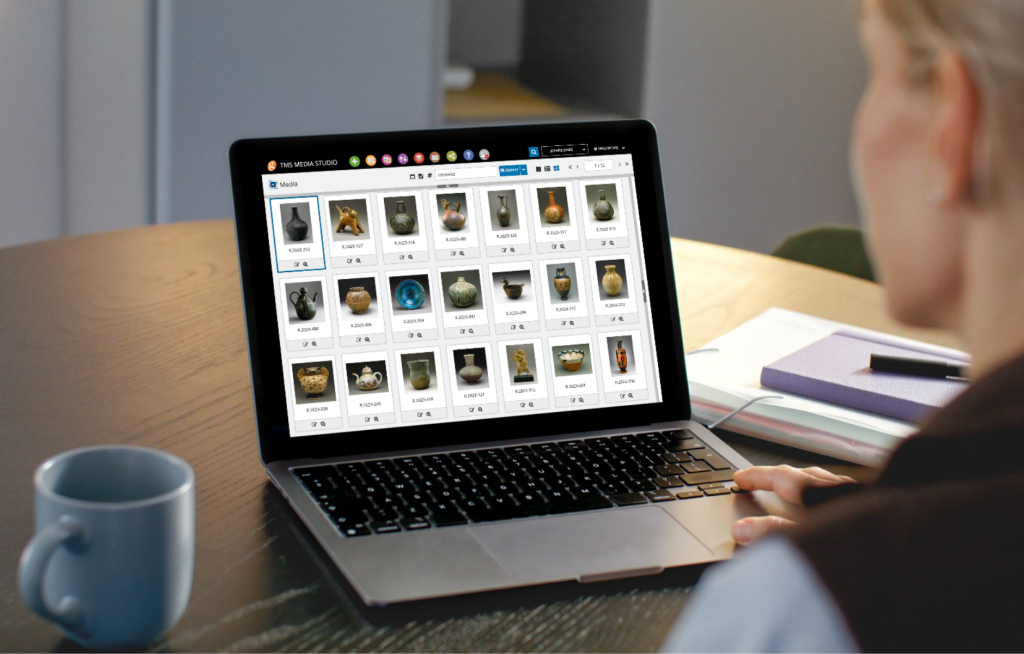
- Manage individual objects with detailed metadata
- Track provenance, condition, location, and rights
- Support high-resolution images and media
- Enable discovery, comparison, and reuse
- Serve multiple internal stakeholders simultaneously
For corporate collections, which often include products, prototypes, packaging, advertising materials, and design artifacts, this difference is essential.
Importantly, choosing a collections management system does not mean abandoning archival standards or practices. TMS Collections includes dedicated archival functionality, allowing organizations to manage traditional archival materials alongside object-based corporate collections.
This is particularly valuable for organizations that maintain both a corporate archive and a corporate collection, enabling them to reduce silos while preserving appropriate archival description and governance.
When How a Collections Management System Supports Corporate Collections
Object-Level Context and Relationships
A CMS allows organizations to document each item in their corporate collection as a discrete object, while also capturing relationships between objects. For example:
- A shoe prototype can be linked to its production run
- A pen design can be associated with marketing campaigns or patents
- Packaging designs can be connected to product launches
This level of relational data is not natively supported in archive systems but is core functionality in collections management software such as TMS Collections.

Supporting Product Design and Innovation
Corporate collections are increasingly used by design and product development teams as inspiration sources. A collections management system enables this by making historical items searchable, visual, and comparable.
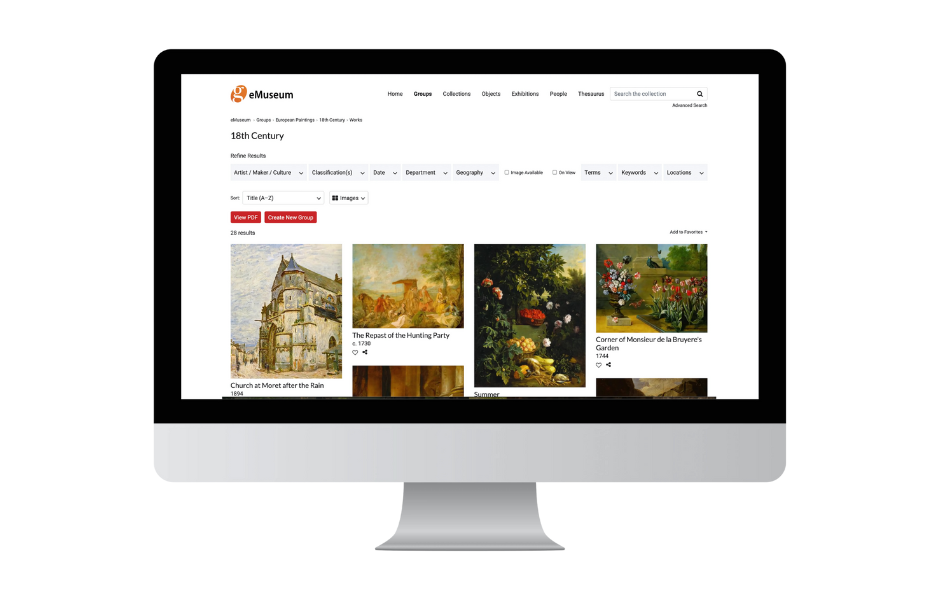
Using eMuseum, the TMS Suite’s web-based publishing platform, organizations can:
- Provide designers with controlled access to historical products
- Enable visual comparison across time periods, materials, or styles
- Surface metadata such as dimensions, materials, and manufacturing techniques
- Allow teams to explore past designs without physically handling objects
For example, a footwear company can use eMuseum to review past shoe models, analyze design evolution, and draw inspiration for new products. Similarly, a manufacturer of writing instruments can examine earlier pen designs to inform new materials, finishes, or ergonomic decisions.
These same principles apply to corporate art collections, where teams must track location, condition, valuation, insurance, and display history while enabling internal visibility and stewardship.
These workflows are not feasible in an archive system, which typically prioritizes textual records over visual, object-centric discovery.
Improving Access Without Sacrificing Control
A common challenge for corporate collections is balancing access with governance. Collections management systems address this by offering:
- Role-based permissions
- Department-specific views
- Controlled public or internal publishing via tools like eMuseum
Marketing teams may need imagery for campaigns, while legal teams may require rights and usage information. A CMS centralizes this information, ensuring that all stakeholders are working from a single, authoritative source of truth.
Operational Efficiency and Risk Reduction
Corporate collections often face inefficiencies caused by:
- Duplicate records
- Inconsistent terminology
- Assets stored in disconnected systems
- Knowledge silos held by individuals
A collections management system improves processes by:
- Standardizing metadata and vocabularies
- Tracking object locations and movements
- Recording condition and conservation history
- Reducing reliance on institutional memory
For organizations managing both archives and collections in separate systems, these risks are amplified; making consolidation and shared visibility increasingly important.
The TMS Suite is designed to support these workflows at scale, drawing on decades of experience supporting museum and institutional collections worldwide.

When Archives Are Enough (and When They Are Not)
Archive systems are not inherently flawed; they are designed for a specific purpose. For organizations focused exclusively on records management and historical documentation, an archive system may be sufficient.
However, when organizations are expected to manage artworks, products, prototypes, or other object-based collections—or when archives are actively used to support design, storytelling, or brand engagement—they often outgrow archive-centric tools.
A collections management system acknowledges that corporate collections are dynamic assets, not static records.
For organizations serious about leveraging their corporate collections as strategic resources, a collections management system is essential. Unlike archive systems, a CMS is designed to manage objects holistically, support discovery and reuse, and enable collaboration across departments.
For organizations that manage both corporate archives and corporate collections, a collections management system like TMS Collections provides a unified framework—supporting archival materials while enabling richer object-level context, shared workflows, and cross-team access.
With tools such as TMS Collections and eMuseum, provide corporate collection teams with the infrastructure needed to preserve their heritage while actively shaping their future of turning historical assets into drivers of insight, inspiration, and innovation. To see the TMS Suite in action, fill out a form to speak to an expert.