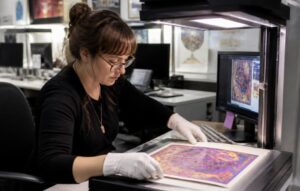
As galleries, libraries, archives and museums bring their physical objects into the digital realm, new methods of organization need to be designed to support the accessibility and sustainability of the digital media.
Sarah Gillis, Assistant Registrar for Image Management at the Worcester Art Museum in Worcester, Massachusetts, specializes in cataloguing photographic archives. At our TMS user conference, Collective Imagination, we had the honor of having Sarah present her paper, “FRBR and TMS: Applying a Conceptual Organizational Model for Cataloguing Photographic Archives.”
In the paper, Sarah examines the process of cataloguing analog and born-digital photographs, and how conceptual models, such as the DCC Curation Lifecycle Model, OAIS Reference Model, and Object-Oriented FRBR, can offer guidance. For Sarah, it’s about finding the best methods of organizing photographic archives to ensure “accessibility and sustainability, both physically and digitally, for years to come.”
Sarah and her team have been using these conceptual models while cataloguing images of objects from the Worcester Art Museum’s permanent collection using the Media Module of TMS. They then share images on their online search engine that is powered by eMuseum.
You can download Sarah’s paper here.