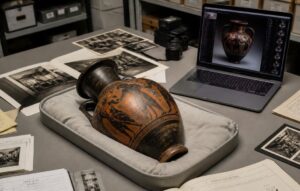
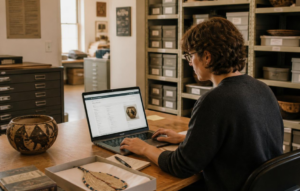
This short video follows a day in the life of Jane, a busy conservator who must manage treatment and object preparation for an upcoming exhibition. Learn how Jane manages the exhibition checklist, determines shipping and display requirements, and records conservation treatments. Jane uses a powerful conservation information system to work efficiently and streamline her workflow to save time.
Learn more about Conservation Studio, the software highlighted in this video, and developed with the help of more than 50 conservators.
Video Transcript
Meet Jane, a busy conservator who is preparing objects for an upcoming exhibition. Jane has a lot to keep track of. There’s the ever-changing exhibition checklist, treatment and object preparation, as well as the responsibility of determining shipping and display requirements to make sure the objects are well cared for.
Fortunately, Jane has a powerful, easy-to-use conservation information system to help her manage her work. Everything relating to her objects and projects is securely stored and easily accessed from any computer, wherever she is.
For the upcoming exhibition, Jane sees all the objects on the checklist on her landing page—no searching required. With one click, each object’s status, treatment notes, reports, and related emails are at her fingertips.
Jane receives an alert on her desktop notifying her that a period dress will no longer be part of the exhibition but a suit of armor will take its place. The updated checklist is automatically shared with all exhibition staff.
After examining the armor, Jane determines that it needs repair. Jane uses her conservation information system to manage images taken before, during, and after treatment. Jane’s curator has access to this same information, so collaboration is simplified.
When the exhibition closes, all information, from object treatments to location changes, becomes part of the object’s history. Jane is able to minimize unnecessary object handling; with all the up-to-date information easily accessible, only the required objects are disturbed.
With her conservation information system, Jane is able to work more efficiently, with less stress, and can focus on what she does best—conserving the collection for future generations.
To learn more about how the solutions shown in this video can help streamline your conservation management processes, contact us today.