Who They Are
Promoting Teaching and Research Through Excellence in Collections Management
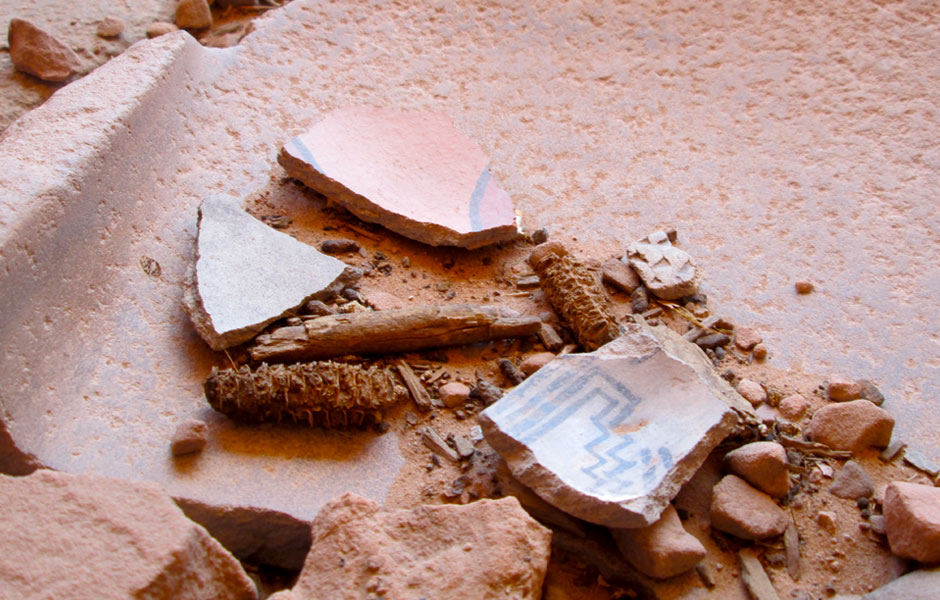
The Peabody Museum of Archaeology and Ethnology, in Cambridge, Massachusetts, is among the oldest museums of its type in the world, and is home to one of the finest collections of human cultural history. Since the late nineteenth century, the Museum has played an active part in the history of American anthropology and in the evolving relationship between museums and native peoples. With a focus on teaching and research, staff at the Peabody needed to consolidate their object data and make it easily accessible to the many students and researchers who rely on it for their work, as well as native leaders who need access to their cultural objects.
The Challenge
The Peabody houses a total of 1.4 million objects. While the majority of those are archaeological and ethnographic in nature, the collection includes human osteology objects, with 20,000 individual human remains to account for. Peabody staff wanted a collections management system that was flexible enough to allow them to document the artifacts in a way that would make finding and studying them easier. Most objects in the collection were gathered through scientific exploration, so the artifacts relate to paper archives and to photographs in the collection. It was important to consolidate this data by merging the 3D collection with the archives and photos in order to make it more meaningful to students and researchers.
The Solution
After researching the available collections management solutions, the Peabody selected The Museum System (TMS) and eMuseum from Gallery Systems. “One of the reasons we went with Gallery Systems was their commitment to us in helping develop the tools to support specialized features for an anthropology museum,” explains David DeBono Schafer, Senior Collections Manager at the Peabody Museum. “TMS is comprehensive enough to let us capture all necessary data on each object. It gives us the flexibility to adapt the modules and fields so that they make the most sense to us, and makes searching our collection easier for staff, students and researchers.”
“One of the reasons we went with Gallery Systems was their commitment to us in helping develop the tools to support specialized features for an anthropology museum,” explains David DeBono Schafer, Senior Collections Manager at the Peabody Museum. “TMS is comprehensive enough to let us capture all necessary data on each object. It gives us the flexibility to adapt the modules and fields so that they make the most sense to us, and makes searching our collection easier for staff, students and researchers.”
TMS at the Peabody
Today, all information at the Peabody is managed in TMS, which supports the museum’s mission of achieving high teaching and research standards. Each semester, the museum brings 2,000 artifacts to undergraduate classes. With TMS, Peabody staff are now able to easily track the movement of each artifact, recording when it is needed and which professor has made the request. “Two years from now when the class is offered again and the professor asks for those objects, we can look them up in TMS and know exactly what they need,” says David. “We also run statistics in TMS on how many courses we are supporting at Harvard and at other universities, the number of students served, etc. We then export the data from TMS and submit it as part of our annual report.”
TMS has allowed the Peabody to manage all the information related to each object, from paper archives to photographs, in one easily accessible place. The level of configurability the software affords has also been a benefit. “We can adapt the modules and fields to fit our unique needs,” says David. “For example, we use the Components fields, which other institutions might use for, say, recording information about a painting or a mount, to track the 320 bones of a human skeletal remain. And, we’ve morphed all our data in the ‘Culture’ and ‘Period’ fields into one wonderfully searchable Thesaurus field.”
“The Events module in TMS has really become a priceless tool for us,” David continues. “We use it to capture data such as an object’s carbon-14 analysis, DNA details, the lab that did the testing and the professor who made the request. If the professor publishes the results, they send a PDF to Museum staff, who then attach it to the Media tab on that Event. We can see the published paper that came out of that DNA study, and having it all together in one place really helps researchers.” Peabody staff also use the Events module to document what each researcher examined, and when. Should researchers need access to the objects again, staff can quickly assist them.
eMuseum and NAGPRA
Also helping advance research at the Museum has been the integration of TMS with eMuseum online collections software. Before the Peabody put their collection online, researchers would come for weeks or months at a time to sift through objects. With eMuseum web access, researchers could see the collection, select the objects they wanted to study, and come to the Museum for a shorter time. Reducing research time helps to reduce the number of collection artifacts being moved and handled, and decreases staff time spent supervising researchers. Within three years of putting their collections online, research increased by 300%, without the need to increase staff.
Finally, TMS has been instrumental in helping the Peabody Museum remain accountable to NAGPRA (the Native American Graves Protection and Repatriation Act, a U.S. federal law). “NAGPRA requires us to return human remains, funerary objects, and sacred objects back to native groups,” explains David. “This is a huge undertaking for us as we have the largest collection of human remains in the country besides the Smithsonian. TMS supports our NAGPRA work, with in-depth record keeping. For example, the law requires us to prove that an object is from a specific location. All of our records have to match up accurately. As another example, once we report that we have, say, 317 bones to repatriate to the Iroquois, there better be 317 bones in that storage container when they request them. So we’re fanatical about storage location tracking.”
The Peabody’s current focus is to digitize all paper and registration archives and records so that these digitized documents are accessible in TMS. According to David, “It’s the combination of having the objects, photographs, and the paper records available to students and researchers that truly brings value to our collection. Gallery Systems is an essential partner in our museum’s goals.”
The Outcome: Leaner Data, Smarter Workflows
The migration delivered tangible results. Over 25,000 obsolete records were purged, giving the team a cleaner foundation for future data-cleaning and documentation efforts. With TMS Collections in place, the need for complex IT support and virtual desktops vanished. New users could be onboarded more easily, and collection staff could focus more time on core activities.
The project met and exceeded expectations—not just in terms of performance, but also in cultural change. Users embraced the new platform enthusiastically, and the institution permanently shifted to more agile and efficient working methods.
Reflections and Advice
For Megaw, the greatest point of pride was how the institution met the moment. “In the end we were given quite a short timeframe by our IT team to complete the upgrade,” he reflected, “so I was most pleased that we managed to complete the preparations for upgrade, train all users, and successfully upgrade within a couple of months.”
A New Chapter in Collection Management
Aberdeen Archives, Gallery & Museums now operates with a collections management system that is faster, cleaner, and more accessible. By embracing change under pressure and committing to purposeful planning, AAGM not only improved internal efficiency but also strengthened its capacity to serve the public—amplifying Aberdeen’s cultural legacy for years to come.
“Permanently improved ways of working for all TMS users achieved in a short period of time.” — Thomas Megaw, Lead Curator (Collections Management)
If you’re considering transitioning from TMS for Windows to TMS Collections and would like to speak with a Gallery Systems expert about your options, we’re here to help. Please fill out our contact us form to start the conversation.
The Challenge: Modernizing Collections Systems for Greater Access
-
Existing systems prevented future growth
-
Barriers to collaboration
-
A cross-campus initiative required a unified access strategy
The Solution: Transitioning to TMS Collections and eMuseum
-
Migrated from EmbARK and Web Kiosk to TMS Collections and eMuseum
-
Implemented a web-based collections management system with remote access capabilities
-
Leveraged Gallery Systems Managed Hosting for ongoing maintenance, security, and updates
The Results
-
Created a scalable cataloguing system for more than 3,000 time-based media works
-
Improved preservation and documentation of migrated digital assets
-
Reduced storage complexity through structured management of multiple file versions
-
Improved access to collection information and online research resources
-
40%
Less time spent cataloguing new objects
-
100%
On-time internal audits
-
3x
Faster access to media across roles
-
19
Museum Studies, Art History, and Fine Art Degrees
Less Admin, More Accuracy, Better Access
After go-live, the team saw measurable improvements in how they worked across departments.
One Platform for Collections Management,
Conservation, Media, and Publishing
TMS Collections
eMuseum
More Success Stories
Standardizing Collections Data: From Tactical Cleanup to Data Governance
Museum professionals are well acquainted with the discipline required to produce high-quality administrative content. Grant proposals, exhibition labels, and marketing materials are typically…
Why Galleries Can No Longer Wait to Modernize Their Gallery Management Software
The Art World’s Technology Reckoning Only 19% of galleries call themselves technology leaders, yet 43% plan to invest more in online sales this year, according to Artsy’s Art Market…
Standardizing Collections Data: From Tactical Cleanup to Data Governance
Museum professionals are well acquainted with the discipline required to produce high-quality administrative content. Grant proposals, exhibition labels, and marketing materials are typically…
Why Galleries Can No Longer Wait to Modernize Their Gallery Management Software
The Art World’s Technology Reckoning Only 19% of galleries call themselves technology leaders, yet 43% plan to invest more in online sales this year, according to Artsy’s Art Market…
Standardizing Collections Data: From Tactical Cleanup to Data Governance
Museum professionals are well acquainted with the discipline required to produce high-quality administrative content. Grant proposals, exhibition labels, and marketing materials are typically…
Why Galleries Can No Longer Wait to Modernize Their Gallery Management Software
The Art World’s Technology Reckoning Only 19% of galleries call themselves technology leaders, yet 43% plan to invest more in online sales this year, according to Artsy’s Art Market…
Standardizing Collections Data: From Tactical Cleanup to Data Governance
Museum professionals are well acquainted with the discipline required to produce high-quality administrative content. Grant proposals, exhibition labels, and marketing materials are typically…
Why Galleries Can No Longer Wait to Modernize Their Gallery Management Software
The Art World’s Technology Reckoning Only 19% of galleries call themselves technology leaders, yet 43% plan to invest more in online sales this year, according to Artsy’s Art Market…
Standardizing Collections Data: From Tactical Cleanup to Data Governance
Museum professionals are well acquainted with the discipline required to produce high-quality administrative content. Grant proposals, exhibition labels, and marketing materials are typically…
Why Galleries Can No Longer Wait to Modernize Their Gallery Management Software
The Art World’s Technology Reckoning Only 19% of galleries call themselves technology leaders, yet 43% plan to invest more in online sales this year, according to Artsy’s Art Market…